In the 1980s, Elizabeth Garouste and Mattia Bonetti helped to define the French design moment known as le nouveau design Français. Over the course of a three-decade partnership, the two created a whimsical neo-baroque style, with a visual language that was distinctly postmodern yet unironic in a uniquely French way. Though their work emerged concurrently with the advent of Italy’s Memphis Group and shared much of its sardonic enthusiasm for allusion, Garouste and Bonetti embraced theatricality more wholeheartedly, celebrating decoration as a function of design, not just its flourish.
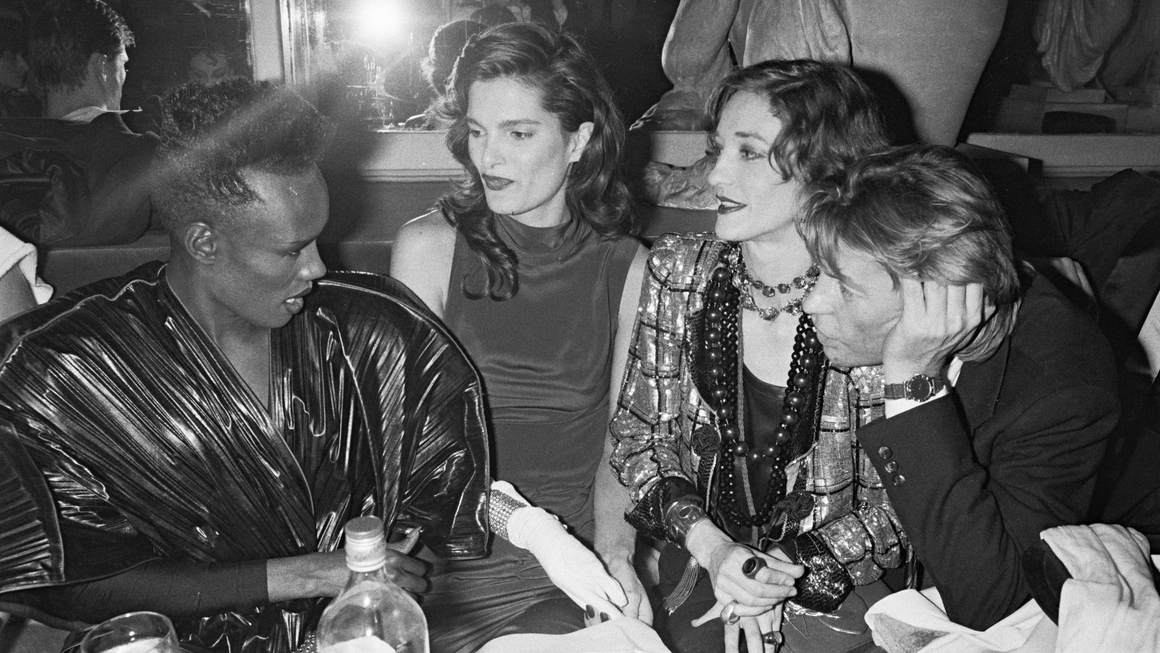
The duo’s partnership began in 1980, with a commission to decorate a new dinner club in the basement of the famous Le Palace nightclub, the Parisian answer to Studio 54. There, fashion designers, punks, intellectuals, and an out gay clientele were made to feel at home in nightclub impresario Fabrice Emaer’s carefully orchestrated environment. Roland Barthes described the club as “not a simple enterprise but a work, and those who conceived it may regard themselves with good reason as artists.” With the help of actual artists such as Gérard and Elizabeth Garouste and Mattia Bonetti, Emaer crafted this distinctly modern performance space, a place to see and be seen.
Prior to Le Palace’s opening, Emaer began to work with Gérard Garouste, Elizabeth’s husband, likely at the suggestion of the more established designer Andrée Putnam. At the time, Gérard was not yet a famous painter, working as a set decorator for theaters, but he was a nightly fixture at Emaer’s clubs. Gérard began to design sets for Emaer’s parties and helped in the initial decoration of Le Palace, painting opera boxes with scenes in a 17th-century Italian style.
As Gérard decorated for Emaer, Elizabeth worked as a shoe designer for her parent’s company and later began designing costumes for the theater. She met Mattia Bonetti through her brother, the actor and surrealist artist David Rochline. Bonetti had until then worked as a textile designer and art photographer. He made illustrations and small photographic projects with clay, developing a wistful visual language which would much later serve as a tool in the duo’s creative process.
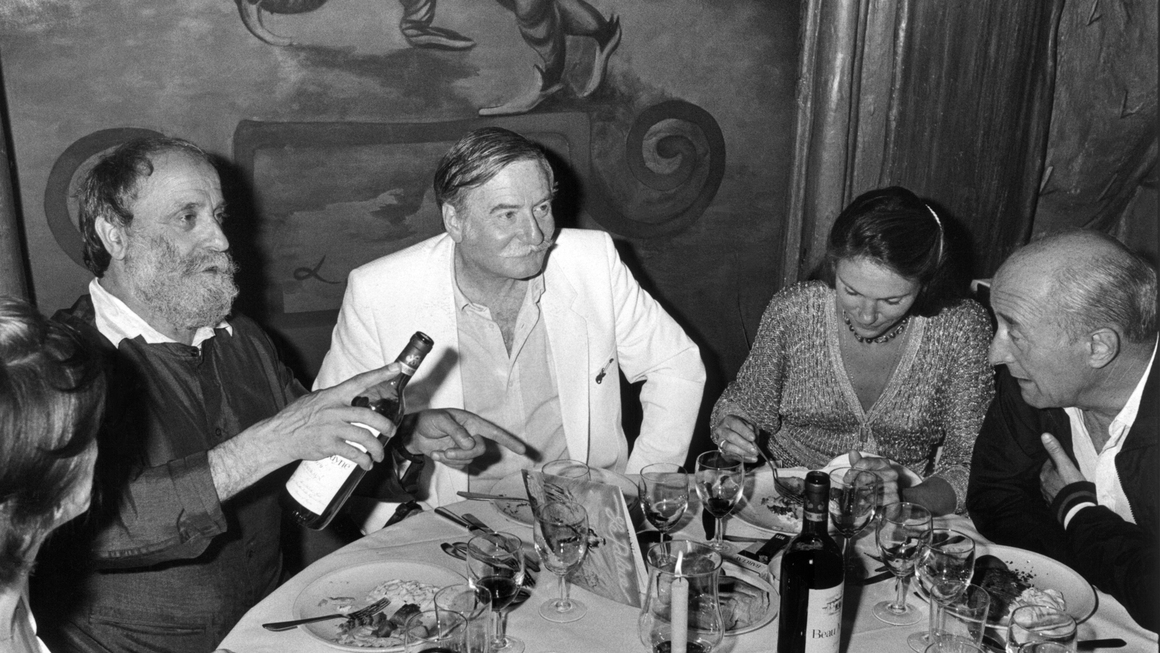
At Le Palace’s opening, Grace Jones rode in on a pink Harley-Davidson amid a storm of pink smoke bombs while the club’s famous lasers strobed. She wore a pink Yves Saint-Laurent tuxedo and performed “La Vie en Rose,” thereafter the club’s anthem. With the club’s immediate success, it became apparent to Emaer that it required a more exclusive enclave “where the princesses could be sure not to leave with vomit on their minks.” He enlisted Gérard, who in turn tapped Elizabeth, who invited Bonetti to help conceive the atmosphere of a supper club called “Le Privilège.” Led by Gérard, the three were all taken with the spirit of a Venetian fête and addressed the club with all the theatrical ambition of their moment and métier.
The walls were draped with a decadent mural in which Gérard blended “Cocteau, Greek mythology, and the commedia dell’arte” into a surreal backdrop. The painting hung in curtain-like sections behind the banquet tables, its ropes and sashes holding them in place. Elsewhere, Elizabeth and Mattia designed stucco columns, great vases, and faux drapes to complement and confuse the paintings. The entire project, Elizabeth said, was carried out in the spirit of the eccentric neoclassical decorator Emilio Terry, their senior on the scene.
At Le Privilège, Elizabeth Garouste and Mattia Bonetti were already rejecting the industrial language of late modern design and foreshadowing their fascination with medieval and baroque themes. The duo created lamps dressed with terra-cotta masks and designed the Palace chair, their first real piece of furniture. Half stage scenery and half restaurant decor, the romantic chairs in painted oak with “backs like mughal arches,” as Stephen Calloway describes it, feels indebted to Terry’s theatrical historicism. Their preference for traditional—even primitive—materials would soon become more pronounced; as Gérard said, “[T]he greatest luxury comes from the simplest materials: iron, paint, plaster.”
Less than a year after the success of Le Privilège, Garouste and Bonetti debuted their first furniture collection at the prestigious decorating house Jansen. Benefiting from the fashionable club’s notoriety, the duo became an overnight phenomenon. The collection’s centerpiece, later known as the Barbare chair, was of hammered, patinated bronze or iron with forked spindles and a pony-hide seat, attached by thongs. The collection made such an impression that the press quickly dubbed the pair les barbares (“the barbarians”), a label which would soon include a circle of like-minded designers.
A few years later, Agnès Kentish founded the gallery En Attendant les Barbares to exhibit and publish the work of Garouste, Bonetti, and their contemporaries. Though Garouste and Bonetti would go on to transcend the Paleolithic aesthetics of their first collection, their work continued to challenge prevailing trends, meeting the sleek, high-tech decadence of the 1990s with traditional materials, along with increasingly strange and exuberant pastiches, as in the Prince Impérial chair, a neon-orange reinterpretation of a Second Empire fauteuil trimmed with a raffia hula skirt—continuing to work “deliberately close to the edge of taste” (in Bonetti’s words), always pushing just beyond the tasteful into something new.
Graham Hamilton is an artist and writer living in Paris. His multidisciplinary practice spans floral arrangement, silkscreen, photography and sculpture, focusing on the tension between organic decay and preservation