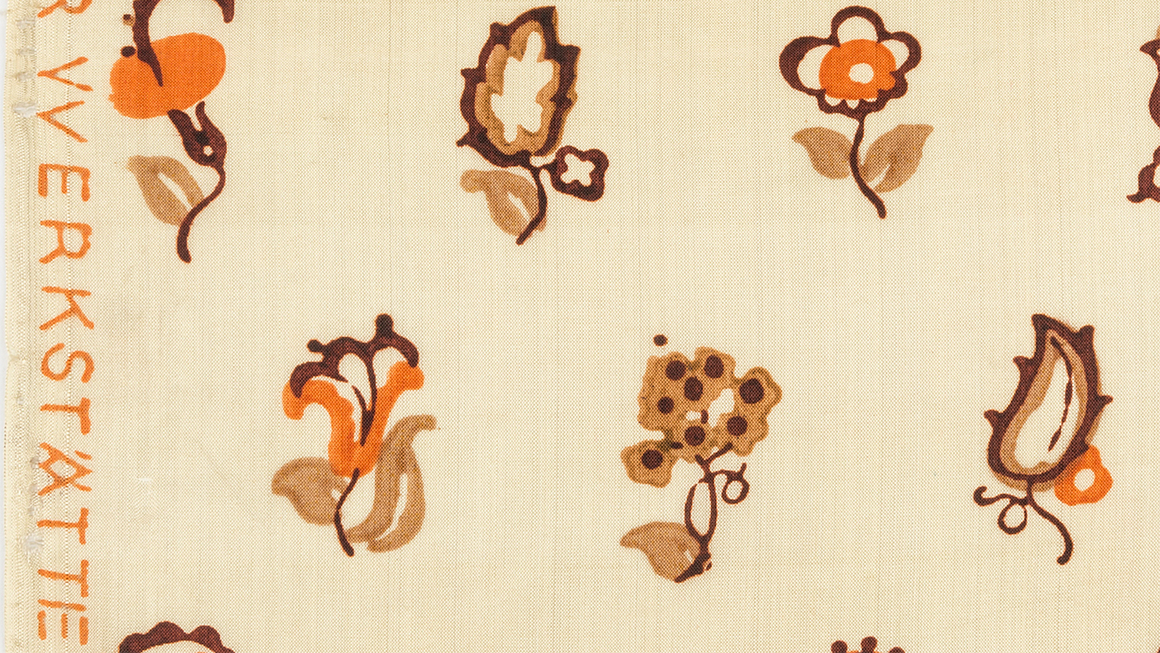
In 1911, Dagobert Peche drew a family of flowers. He was a sensitive Austrian designer who had just started what would be a brief, brilliant association with the Wiener Werkstätte, then Vienna’s reigning decorative arts movement (and some would contest still today’s). In his sketch, which would eventually be translated to wallpaper and fabric, what look like pansies, irises, bluebells, and tulips dance in a soft order, gathered but distinct in their shapes and coloring. Einsame Blume (Lonely flower), as the design was called, was one of Peche’s first decorative endeavours after meeting Josef Hoffmann, co-founder of the Viennese Secessionists, in that same year. In the twenty-four-year-old’s fast and loose depiction of nature's most innocent beings, you can see a bit of the spirit that led the hand. Peche was both fiercely alive and relentlessly fragile, producing a body of work with simultaneous undertones of optimism and despair. His career embodied one of the primary concerns of the Werkstätte: how to bring about the most beauty and efficiency with the most limited material palette and the most streamlined production.
The same year Peche drew Einsame Blume, he married Nelly Daberkow, a few years his senior and a Protestant to his Catholic, after roughly a year of courtship. They had two daughters. By 1915, only four years later, Peche had a mistress. He wrote her a string of love letters as beautiful visually as their content is passionate. His life is full of these tensions, littered with dueling definitions of beauty and satisfaction. In 1914, the year before his first love letter to his mistress, Mathilde Junger, he decorated his Neubaugasse home as a personal panacea for the outbreak of World War I. Again, flowers figure in his catharsis: white bouquets against black in the living room and more playful sprigs, painted roughly a year earlier, against a light background in his dining room. His decorative interventions can be logged as a vivid series of causes and effects, chickens and eggs.
In a 2002 retrospective of the designer and architect’s work at the Neue Galerie, the Junger love letters showed Peche’s penchant for passion. August Ruhs writes that Peche “loved women as himself. And it would seem that he derived his creative strength as an artist and craftsman from that love.” His loves figured as characters in a wider imagined Eden that fed his creative work. He says to Junger: “Now you are living among the trees and flowers and can feel the earth. I only want to tell you that here too there are trees growing.” He is calm and insistent, using the beauty of the natural world as a ploy for sex.
Early in his career, Peche covered every apple on a single tree in gold foil, celebrating the life-giving fruit while staunching its use and growth. The symbolism here is unavoidable: through his intervention Eden becomes leaden, stunning in a different way. It dazzles but it cannot feed us. Peche cleverly plays with the idea of value here. Is the apple more valuable as sustenance or as a symbol? He begins as he is to continue: extracting the essence of a living thing, understanding where its beauty lies, and transmitting that into the man-made.
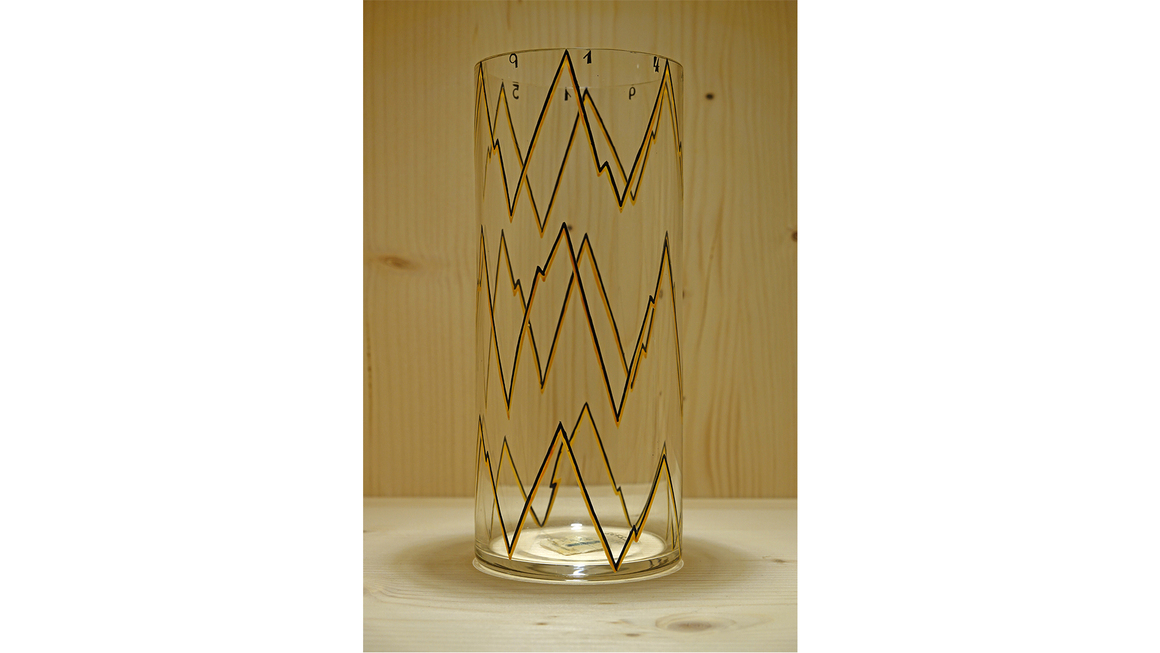
In 1915, Peche designed a “war glass.” Jagged, painted lines in bronze and black mimic mountains, unyielding and punishing. The cup’s form is simple and cylindrical, with numbers interspersed along its rim, vague and foreboding. Roughly five years later, he designed a splendid six-branch chandelier. Each arm curls up from a slender center, looping once before meeting globe-shaped lights at each apex. Feathers unfurl near the neck of each light like the fletchings of an arrow, transforming into petals that softly frame each light. The chandelier is fluid and inviting whereas the drinking glass is stagnant and grim. Wonderful inconsistencies like this appear throughout Peche’s prolific twelve years as an artist: as his moods veered from ebullient to despairing, so did his work.
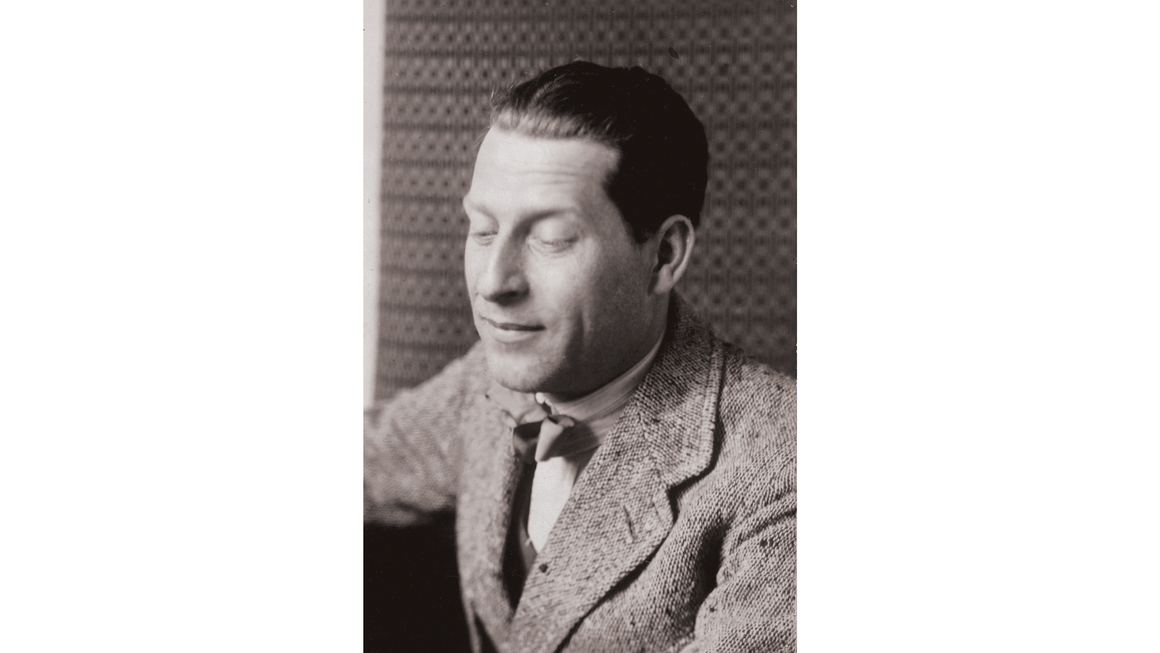
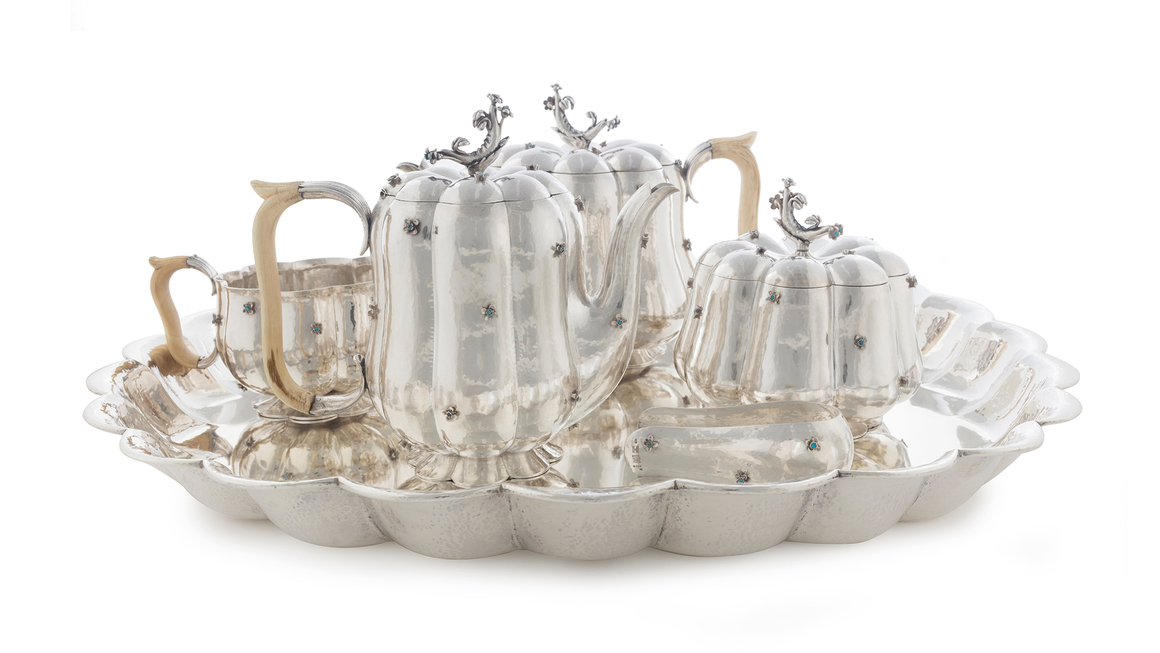
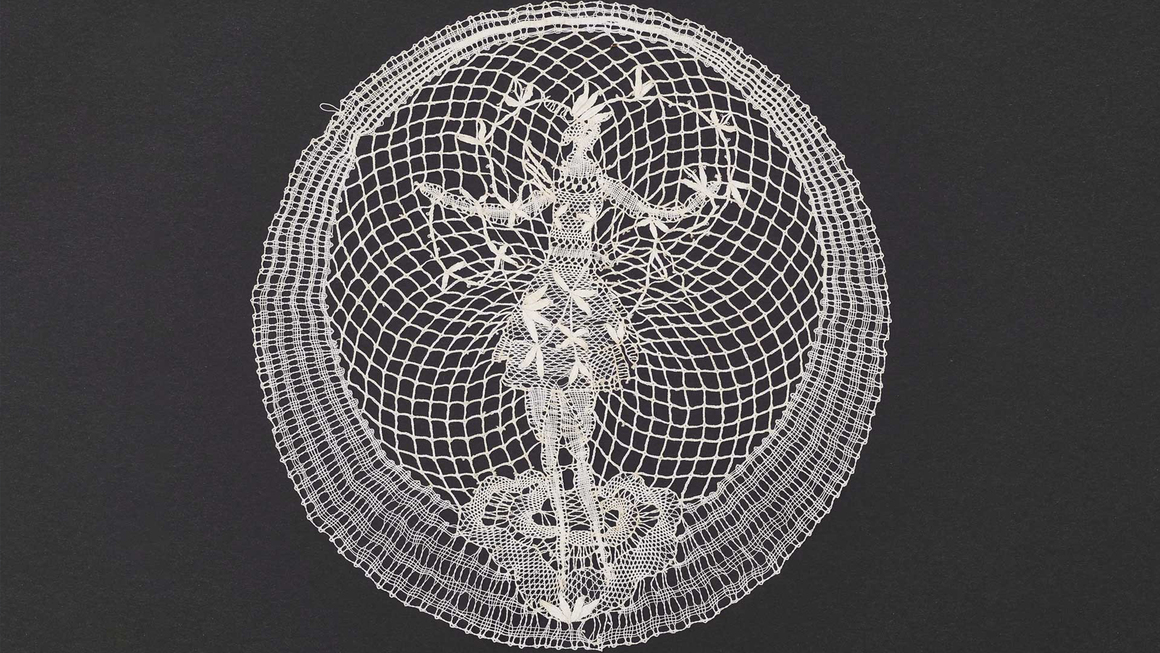
His practice evolved over the span of those twelve years producing a startlingly expansive oeuvre of tea sets, wardrobes, chairs, mirrors, table lamps, jewelry, wallpaper, lace, and entire rooms. He was concerned with the functional, the expressive, the divine, and the obscene, sometimes all at once. The contradictions inherent in his person and practice make absolute sense when one considers the context within which he was working. He fought in World War I briefly, before being discharged with an injury, returning immediately to continue his work with the Wiener Werkstätte. He died at thirty-six, after a brief battle with cancer, in 1923. His work, letters, and rare portraits remain the only markers of his expansive emotional life.
Despite his brief career, his involvement in the Wiener Werkstätte drove it forward away from Hoffmann’s elegant rigidity, towards a more flamboyant, baroque decorative expression. Hoffmann’s armchairs rest on skinny, straight, space-saving legs; Peche’s on rotund stumps. Hoffmann’s spoons form a perfect oval, but they prove uncomfortable in the mouth. Peche covered an entire room in rainbow-hued ombré stripes; he decorated wallets with blazing, falling stars. Where Hoffmann insisted, Peche seduced.
In many of his designs, Peche draws us into myths of his making, all the more arresting because his characters are recognizable: the pumpkin, the snake, the blade of grass, the horse. His was a fantastical menagerie made with the same efficiency and material sensitivity that crowned simpler forms from the Wiener Werkstätte. There is an economy in Peche’s use of extravagant materials and extravagant subjects.
The biblical metaphors that reign alongside passion in Peche’s practice continued throughout his career. Der brennende Dornbusch, his 1922 manifesto, laid out the applied arts as a fertile ground for ornamental expression and experimentation. His title refers to the burning bush from the Old Testament vision of Moses, who sees an angel emerge from the flames before hearing God’s voice speak from within them. Of course, a notably miraculous element of the story is that though the bush burns, it is not consumed or destroyed by the flames—it lives on.
Camille Okhio is a New York-based arts and design writer and historian.
Related Stories