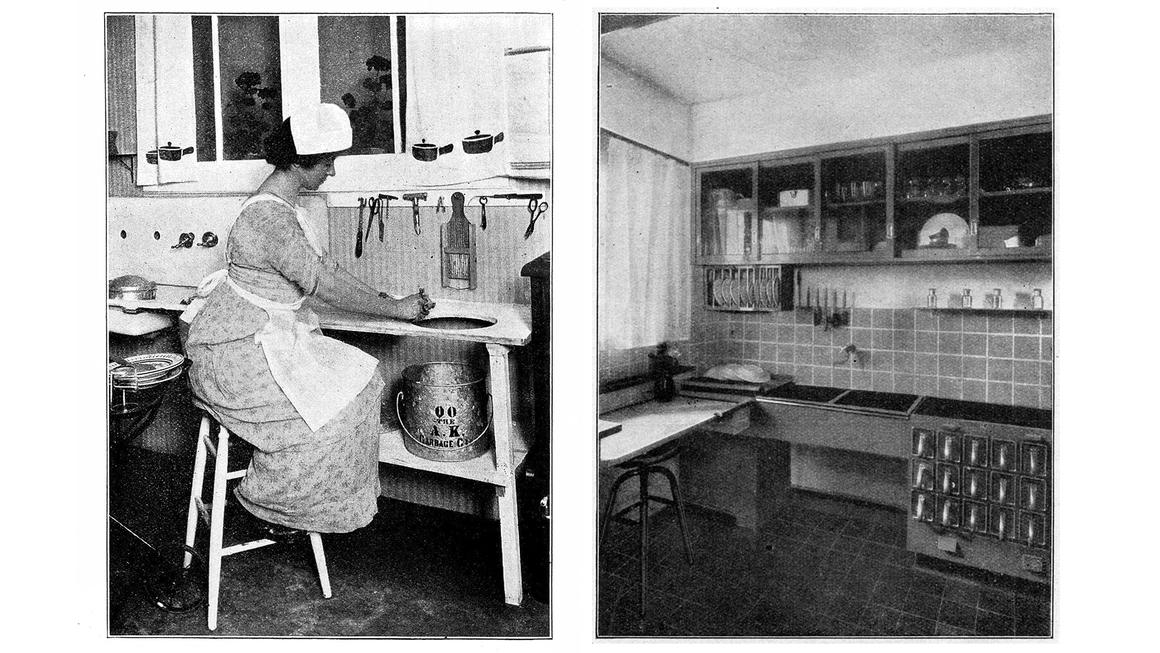
“Founder and Director Applecroft Home Experiment Station, Greenlawn, Long Island; author of The New Housekeeping (now translated into six foreign languages); Efficient Housekeeping (textbook used in hundreds of home economics study courses) . . . newspaper syndicate writer on home economics to millions of newspaper readers each week . . . first woman consumer to address Congressional hearings on distribution and home buying problems.”
These are just a few of the achievements listed on the opening page of Christine Frederick’s best-selling book, Selling Mrs. Consumer. Published in 1929, it describes how women could—and should—redesign their domestic schedules and kitchens in order to use their time more efficiently.
By sharing this vision in her writing and lectures, Frederick helped millions of women in the U.S. and elsewhere to modernise their households in the early 20th century, giving them more time to focus on personal interests or earning extra money. Most of her innovations were the results of rigorous tests conducted in what she called the “Home Experiment Station,” a private laboratory at Applecroft, her house in the leafy Long Island hamlet of Greenlawn, now best known for its annual pickle festival.
Born Christine Campbell in 1883, she was brought up in Boston, Massachusetts, by her mother, as her father left them soon after her birth. After graduating from Northwestern University, she briefly became a teacher before marrying J. George Frederick, a businessman and aspiring author who introduced her to the increasingly popular theories of scientific management developed by the engineer Frederick Winslow Taylor.
Taylor sought to improve the productivity of businesses by standardising all aspects of their operations with the aim of reducing costs and improving quality control. Frederick shared her husband’s enthusiasm for Taylorism, as it was called, but chose to focus Taylor’s principles and methodologies on housekeeping, not commerce. Having analysed every aspect of her domestic schedule by applying Taylor’s time-and-motion studies to individual tasks, she set up the Home Experiment Station in 1912 to test kitchen appliances, as well as her own methods of cooking and cleaning, to identify possible improvements, such as standardising the height of the work surfaces.
Frederick, still in her twenties, shared her findings in a column for the Ladies’ Home Journal, one of the most popular U.S. women’s magazines of the time with over two million subscribers. In 1913, the columns were published as a book, New Housekeeping: Efficiency Studies in Home Management. Other books followed, including Household Engineering: Scientific Management in the Home and Selling Mrs. Consumer. She filled them and her lectures in the U.S. and Europe with diligently researched charts and diagrams, always reinforcing her arguments with relevant statistics as well as practical examples of how to “Get Away from Drudgery” or “Plan Your Kitchen to Save Work.”
Frederick realised that women were becoming better educated, increasingly likely to control household expenditure, and less inclined to waste time on unnecessary chores. But she had a limited vision of how they could use their newly liberated time, as she invariably described women as remaining within their homes, rather than pursuing productive careers outside them. As a result, Frederick was frequently criticised as being too conservative by women’s rights campaigners.
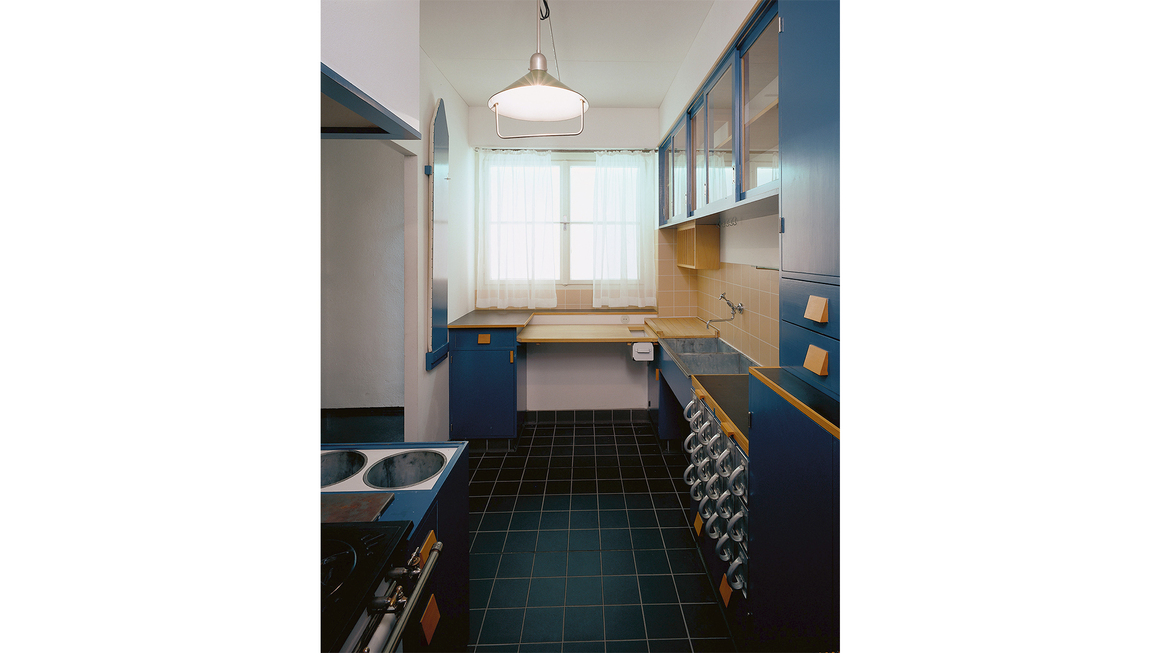
Fortunately, other women would make a more progressive case for her, notably Austrian architect Margarete Schütte-Lihotzky, who read New Housekeeping after it was translated into German. The first woman to study architecture at the University of Applied Arts in Vienna, she drew on Frederick’s time-saving theories to design social housing for the Frankfurt city council. One outcome was the compact Frankfurt Kitchen. Designed by Schütte-Lihotzky in 1926, it has been a global model for modern kitchens ever since. The Frankfurt Kitchen was inspired by Frederick’s economical use of space and her determination to speed up women’s domestic chores, but Schütte-Lihotzky saw this as a way of helping women to earn money and build productive careers outside their homes, rather than to devote less time to housework.
During the mid-1920s, Frederick was at the height of her fame, but a decade later, her career was fading. In 1939, she left George, tired of his womanising, and sold the family home. After living in New York, she moved to Laguna Beach in California in 1949, where she tried unsuccessfully to rebuild her career by writing on interior design for a local newspaper and teaching at a nearby school. Frederick retired at the age of eighty and died seven years later. In its obituary, the New York Times praised her for “almost singlehandedly . . . encouraging the design of kitchens to save steps for women.”
Alice Rawsthorn is a London-based writer on design. The author of Hello World: Where Design Meets Life published by Hamish Hamilton, and, most recently, Design as an Attitude published by JRP Editions, she is a co-founder, with Paola Antonelli, senior curator of architecture and design at MoMA, New York of the Design Emergency podcast and research platform to investigate design’s role in building a better future.
Related Stories